Wednesday, April 30, 2014

Declines in large wildlife lead to increases in disease risk

        As we know, every animal and plant in the ecosystem has an effect on it. Even the smallest fly plays a huge role. Well this little fly is contributing to the deaths and declines of many large wildlife. The location of this occurrence is primarily in East Africa.  In the research by Hillary Young, she explains that fleas have always been contributors to spreading diseases. Since the middle ages, fleas that were carried by rats were responsible  for spreading the black plague. Today these fleas are vectors of plague and many other diseases; such as Bartonellosis, which is potentially dangerous to the human population. The number of death tolls in wildlife have been increasing and this puts humans at risk of infection. 
http://wallpaperswa.com

        Why this huge spike in fleas? Well, as more and more large animals are dying; rodents are thriving, because they are not being haunted by another animal. These rodent carry around fleas that are infected with Bartonellosis. Bartonellosis is, “a group of bacterial pathogens which can cause endocarditis, spleen and liver damage and memory loss.” This pathogen affects both the animals and humans and can have some pretty devastating consequences.

        The problem with rodents is that they reproduce extremely fast and with no animal to kill them, they are just overpopulated; spreading diseases quickly. This pathogens are being spread to elephants, zebras and many more animals. Its sad, because many of these animals are already endangered and by making their habitats even more dangerous isn't helping them. Something needs to be done about this problem, because its not only affecting these animals but us as well.


        The author of this article did a very good job at explaining this new finding and how it can affect us. It was very easy to understand and clear. The author did not seem bias, he was just stating facts. I do wish he would have mentioned what could we do to put a stop to this problem. Is there a solution? What can be done?

http://www.sciencedaily.com/releases/2014/04/140429142201.htm

Wednesday, April 23, 2014

Cow manure harbors diverse new antibiotic resistance genes

Who knew that we could be getting antibiotic resistant genes from cow manure. Well the findings, reported in mBio®, which is an online open-access journal of the American Society for Microbiology, reported that cow manure could be a potential source for new types of antibiotic resistance genes. 

Cow manure has antibiotic resistance genes
This happens in a very simple process. First the cow does its business. Then this manure gets taken to fields and used as a fertilizer. The new types of antibiotic resistance genes then transfer to bacteria in the soil, where the food is grown and this food ends up on our tables. 

So far thousands of antibiotic resistance genes have been identified, such as E. coli. This could be dangerous, because in a hospital scenario a virus that becomes resistant is not good and can cause lots of trouble, including death. For the most part these antibiotic resistant genes aren't harmful in fact they can help us by boosting up our immune system. But research is being done to understand and prevent these antibiotic resistance genes from entering hospital or clinics. "We're hoping this study will open up a larger field of surveillance, to start looking at new types of resistance before they show up in the clinic," says Handelsman.

As we have learned in microbiology, bacteria is adapting and becoming resistant very rapidly to many of our antibiotics, to the point that they aren’t working anymore. This article shows how important the research for antibiotic resistance genes is, because we need to do something about these resistant bacterias. 

The author did a very good job at explaining the new discovery of cow manure having antibiotic resistance genes. This is groundbreaking, because perhaps other animals that we eat also have antibiotic resistance genes. All this animals could be contributing to a super bacteria. (antibiotic resistance genes bacteria)


http://www.sciencedaily.com/releases/2014/04/140422084928.htm

Wednesday, April 16, 2014

Hide and seek: Revealing camouflaged bacteria

        We know how dangerous some bacteria is and how harmful they can be. One of them being Salmonella, which is a bacterial pathogen that can kill in extreme cases. Salmonella was discovered in the late 1800's, and more then 40,000 people get it every year. Did you know that Salmonella has camouflaging bacterium? Bacteria have developed countless strategies to hide themselves in order to survive attacks by the immune system. This strategy consists of Salmonella bacteria hiding within the cytoplasm of a macrophage, hiding there they can not be detected by immune cells. This helps the Salmonella bacterial pathogens multiply with no risk of being killed. 

Salmonella Hiding 
        Thankfully to the research team of Biozentrum at the University of Basel, a protein family that plays a central role in the fight against the bacterial pathogen Salmonella that hides within the cells has been discovered by the researchers. This protein family is called interferon-induced GTPases, they reveal and eliminate the bacterium's camouflage in the cell, which enables the immune cells to recognize the pathogen and to destroy it. 

        The author of this article is trying to inform us on this new discovery that could be groundbreaking to other bacteria pathogens as well. He does a really good job at explaining the benefits of the new GTPases and how helpful they are. This new discovery could even help us find new bacteria that have been hiding in cells or even in space. It really ties in with new ways to find bacteria. I never would have thought that bacteria like Salmonella was a hiding pathogen. Perhaps this new research could even cure more sickness and disease, that we don’t know how to treat.


http://www.sciencedaily.com/releases/2014/04/140416133338.htm

Wednesday, April 9, 2014

Sea otters can get the flu, too

Sea Otters are susceptible to human viruses
        It turns out Sea otters can get the flu as well. According to a new study, by the U.S. Geological Survey and Centers for Disease Control and Prevention study showed that, Northern Sea otters living off the coast of Washington state were infected with the same H1N1 flu virus that caused the world-wide pandemic in 2009. The researchers discovered antibodies for the 2009 H1N1 flu virus in blood samples from 70 percent of the sea otters studied. The Sea otters were not visibly sick, but the presences of antibodies in their system means they were exposed to it. 

        Although the researches are not certain when the otters were infected or how they do know now that human flu can infect sea otters. They also know that the antibiotics that were produced by the Sea otters are specific only to the H1N1 flu virus.  

        But Sea otters aren't the only marine mammals that are susceptible to the flu. In 2010 a study showed that northern elephant seals had also been infected by the H1N1 virus.

       Researchers are now trying to find out how these animals came into reach of this flu and what other viruses have they picked up. 

       This new discovery really peaks my interest, because the H1N1 flu was huge and dangerous, but somehow this marine mammal was able to produce an antibiotic against it. Perhaps we should look into this for alternative antibiotics.    

http://www.sciencedaily.com/releases/2014/04/140408213619.htm

Wednesday, April 2, 2014

Deforestation of sandy soils a greater climate threat

    When we think of deforestation the last thing we think about is the soil. It turns out that deforestation disturbs underground microbial communities in the soil that regulate the loss of carbon into the atmosphere. According to new research led by Yale University scientists, deforestation may have far greater consequences for climate change then we thought. the consequence vary from soil to soil and it depends almost exclusively on the texture of the soil. 

Deforestation more dangerous then we thought
        When deforestation happens serious consequences begin to happen. One of them being extensive loss of carbon from the soil. This carbon is usually retained by subterranean microbes that need the trees to survive and thrive. Once these trees are taken out the microbes begin to die and CO2 is released into the air, but not all soil textures react the same way.

        Thomas Crowther who is a postdoctoral fellow at the Yale School of Forestry and Environmental Studies said that, “Texture overrode the effects of all the other variables that we thought might be important, including temperature, moisture, nutrient concentrations, and soil pH.” For example deforestation dramatically affects sandy soils, but it has minimal effects in muddy, clay-like soils, even after extensive tree removal. This is due to particles in clay like soil that have access to a larger area to bind nutrients and water. This means that soil texture that has mud or clay can do fine without trees for a very long time, but soil textures that are sandy will quickly become uninhabitable to microbes. 

        With this new information deforestation companies can take more precautions on where to cut down trees or not, due to the texture of the soil. Because we now live in a world where global warming is a serious issue these precautions have to be taken. We don’t want any more CO2 in the air then what we already have.


http://www.sciencedaily.com/releases/2014/04/140401162203.htm

Wednesday, March 26, 2014

Pathogens in cheese: Case study on Austrian curd cheese

This Cheese is actually made with bacteria 
Next time someone offers you cheese, think twice. In 2009 and 2010 two different strains of the bacterium Listeria monocytogenes, were found in cheese that got 34 people infected and killed 8. Experts from the University of Veterinary Medicine, Vienna analyzed the the outbreak strains. They where able to show that the strains displayed distinct properties and that they had entered the food independently. This shows that if food products are not produced in a hygienic environment, people who consume these foods can put their lives in danger. 

These cases are rare, but when they do happen they are mortal. In fact they have the highest mortality rate out of all food-borne illnesses.

One of the pathogens responsible for the illnesses was the L. monocytogenes strain. This strain is very effective at infecting epithelial cells of the intestine and liver cells. It is also extremely invase. The second  L. monocytogenes pathogen strain was particularly successful at infecting macrophages, important immune system cells. leaving the immune system weak and easy to attack. Between these two strains they got 34 people sick and killed 8. 

I know that I will be more careful with food now, especially dairy products. This makes me think how clean is our food. I mean, the fruit we eat is gathered by somebody’s hands and the meat we eat is butchered by somebody’s hands as well. We are practically putting our lives in their hands. If they don't wash their hands or maintain our food in proper hygiene conditions we can get really sick. It’s crazy to think about how something so small that you cant see with the naked eye, can get us really sick to the point of death. It always amazes me how we live day by day without thinking of micro bacteria, which is a world with in itself and can be found everywhere.

http://www.sciencedaily.com/releases/2014/03/140321112256.htm

Wednesday, March 12, 2014

5 Second Rule!

        We have all heard about the five second rule, but is it True? It turns out that food that is picked up within five seconds or less is less likely to contain bacteria then if it were left for long periods of time. This research was carried out at Aston University's School of Life and Health Sciences.

5 Second Rule
        A team of final year Biology students, led by Anthony Hilton, Professor of Microbiology set out to find if this myth was true or not. They monitored the transfer of the bacteria E. coli and Staphylococcus aureus from indoor floor types such as carpet, laminate, and tile to toast, pasta and a sticky sweet. The time varied from 3 to 30 seconds.

        The results confirmed the 5 second rule myth. They also found out that flooring plays a pretty big role. Carpet was less likely to transfer bacteria, but laminate and tile were very quick at transferring bacteria. They also carried out a survey to see how many people follow this 5 second rule. The survey showed that 87% of people follow the 5 second rule and out of those 87%; 55% are women.

        Professor Hilton summarized this research by saying, "Consuming food dropped on the floor still carries an infection risk as it very much depends on which bacteria are present on the floor at the time; however the findings of this study will bring some light relief to those who have been employing the five-second rule for years, despite a general consensus that it is purely a myth. We have found evidence that transfer from indoor flooring surfaces is incredibly poor with carpet actually posing the lowest risk of bacterial transfer onto dropped food."

        This research really makes me happy, because I usually follow the five second rule, but only in my house. The research also helps us understand microbes a little bit better, because we know now that it takes time for microbes to transfer to places and different conditions allow them to move faster. I also find it interesting that the floor plays a big role on whether you get bacteria in your food or not.

http://www.sciencedaily.com/releases/2014/03/140310102212.htm

Wednesday, March 5, 2014

Physicians' stethoscopes more contaminated than palms of their hands

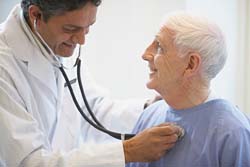
Every time we go to the doctor we notice that when he/she walks in he/she washes her hands before attending you, but have you ever thought if they clean their stethoscopes? In a recent study by, the University of Geneva Hospital, they went out to find which had more microbes doctor's hands or his stethoscope? Their purpose was to find out which one was dirtier in the sense of which one had more microbes, germs and bacteria. They choose the stethoscope because it gets used repeatedly and sometimes with direct contact with a patients skin. This makes the stethoscope a tool for transmitting microorganisms to others very easily. A patient could have MRSA which is very hard to get rid of and dangerous and then carried onto another patient through the stethoscope. 
                     How clean is the stethoscope? 
        
       The study consisted of 71 patients and three physicians. The team gave the physicians sterile gloves and a sterile stethoscope. After the examination of the 71 patients, the stethoscope and the physicians' hands were measured for the total number of bacteria present.

The results where what they expected. There was far more bacteria on the stethoscopes then on the physicians' hands, except for the fingertips.

This study is really important because it shows with facts how vulnerable we can be if others don't sanitize equipment properly. This also can help improve sanitization methods in hospitals, clinics and many other places. This article made me realize how important it is to disinfect equipment, whether your at the gym or in your kitchen or some other place. I would have never thought how dirty stethoscopes were and how we can get some kind of unwanted microorganism form them. 

http://www.sciencedaily.com/releases/2014/02/140227134841.htm

Wednesday, February 26, 2014

Flowing water can slow down bacteria

        In the Massachusetts Institute of technology a recent discovery has been made. (I felt like this tied in with what we went over in class on tuesday; about the different places where microbes live and thrive.) It turns out that you are less likely to find bacteria in moving waters, but you will find them attached to surfaces in those waters. This surfaces can be rocks, wood or any other object in the water. The flowing water can have two significant effects on microbes: Stocker says, "It quenches the ability of microbes to chase food and it helps microbes find surfaces.” 

The flow of the water determines the amount of microbes in it!
        In previous studies of microbes in water, researchers have never really taken into consideration, “the flow” of the water. This can play a crucial role, because it could be feeding the microbes or killing them. It makes us realize how much of an effect flow has on microbes.

        In their experiment they used tubes as the object in the water. They noticed that the bacteria would stick to the walls of the tube and create a biofilm, but this effect changed with the flow of the water. For lots of biofilm to form their needed to be a pretty high flow. 

        This information is great, because with this knowledge they can design medical equipment with slow rates of flow in order to prevent microbes from attaching to the tubes and growing; or it can work the other way around. Now that they understand the concept of microbes and flow they can manipulate it, to their convenience. This new discovery is important, because bacteria the builds a biofilm is 1,000 times more resistant to antibiotics. It is important to prevent the growth of microbes before they create their biofilms, because it is a lot easier and safer. 

http://www.sciencedaily.com/releases/2014/02/140224124119.htm

Wednesday, February 19, 2014

Garlic, More Powerful Then You Think

        Tim Holm Jakobsen, a PhD student at the Faculty of Health and Medical Sciences has recently discovered a remedy for killing resistant bacteria that can be hard to get rid of with the average antibiotic. 

Garlic, more powerful then you think
        We all know their are helpful Bacteria and harmful bacteria. Whether that bacteria is good or bad, it doesn't matter. Bacteria is always developing, and bad Bacteria are developing resistance at an alarming pace. So, new pharmaceuticals that can combat this threat are in great demand. Luckily for us a simple vegetable that can be found in our kitchens is the solution for these hard bacterial strains. What is this vegetable you may ask? Garlic, that yummy vegetable that leaves behind that great scent in our mouths. (Just kidding, I hate garlic!) Garlic has a potent chemical compound known as, “ajoene,” that neutralizes resistant bacteria, by paralyzing their communication system. When it paralyzes their communication system it prevents the bacteria from releasing a toxin known as rhamnolipid which destroys white blood cells in the body. White blood cells are crucial to our immune systems, because they fight off infections and kill harmful bacteria. 

        Bacteria clump together in a tough biofilm made up of organic material; this makes them resistant to the average antibiotic. Tim Holm Jakobsen explains that, “When we add antibiotics to biofilm they have very little effect, and ajoene alone barely makes any difference. It is only when the two are combined that something significant happens,”. In simple words ajoene, which is found in garlic, can help antibiotics kill the harmful bacteria in our bodies. 

        Although this new science is just beginning, their is a great demand and a lot of money in trying to cure illnesses. What better way then natural substances; In fact  2/3 of all new pharmaceuticals are based on natural substances. We know now that garlic is a great natural substance, but how much ajoene do we need for it to help the antibiotics? Garlic contains very little ajoene, in fact you would have to eat about 50 a day for it to reach its effect. Perhaps we could just extract the ajoene that we need, and mix it with the antibiotic. Why make stronger antibiotics that could or could not work, when the answer can be found in garlic. I'm just saying, go with what works and make it better!


http://www.sciencedaily.com/releases/2014/02/140218124538.htm

Wednesday, February 12, 2014

Blog 4 - Microbes on Airplanes

        After writing my, “A day in the life of a microbe,” essay; on the common cold found in airplanes. I decided to expand my search on what other microbes can be found on airplanes. 

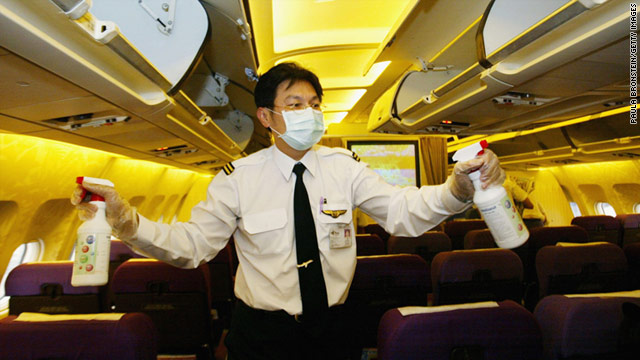
A flight attendant sprays disinfectant onboard
        Sure enough I was not disappointed in what I found and it turns out that airplanes are dirtier then we think. I mean think about it, they travel from state to state; many airplanes even travel from country to country. This allows for many viruses and bacteria to spread and very quickly. The author Douglas Wright made it very clear and explained very well what each of the following microbes can do and where they can be found. He simple put out the facts and supported them with concrete evidence.

        Many of us don’t even think about how dirty planes are. In your seat alone you can find, influenza A, B, and C viruses. This is also known as the flu and it is linked to between 3,000 and 49,000 deaths and 200,000 hospitalizations each year in the United States alone.  In the trays that many people eat off of, you can find MRSA, which is deadly superbug! (People eat off this) The MRSA is a flesh eating bacterium that is very hard to cure and is really resistant. 

        You know that very yummy food you had on the airplane? Well it turns out it might have Listeria, a microbe known to cause gastrointestinal illness and meningitis. In 2009, the meals made headlines when the FDA inspected the world's largest airplane carriers; American Airlines, Delta and United. They found the kitchens crawling with roaches too numerous to count and employees handling the food with bare hands or unwashed gloves. (Yum!) Another thing to be careful for is the water. In 2004, a random sampling of 327 unnamed domestic and international aircraft caused a stir when some water samples tested positive for E. coli

        When your getting sleepy and your flight attendant offers you a pillow or a blanket; think twice before you say yes. These blankets and pillows have been used by other passengers who where also sleepy and tired in previous flights. In 2007 an investigation by The Wall Street Journal revealed that airlines cleaned their blankets every 5 to 30 days. Germs like Aspergillus niger can be found; these germs can cause pneumonia and infections like, lung and eye infections.

        Next time think twice before using airplane resources; if possible bring your own water, snacks, blankets, etc. Alway remember to wash your hands to avoid getting sick and try not to touch everything.


http://www.cnn.com/2010/TRAVEL/12/22/bt.germs.breed.on.plane/

Wednesday, February 5, 2014

New biofuel sources that don't require farmland

Bacteria used as energy
http://www.popularmechanics.com
        Just recently science has turned to farmland crops such as corn and soy for fuel, but to grow enough to use it as fuel takes extreme amounts of land. Fortunately, a new discover has been made, which is faster and it doesn't require removing valuable farmland form the food production chain. This new discover is a biofuel, made from bacteria. More specifically Streptomyces. Streptomyces is the main candidate for this new biofuel, because it can store large amounts of oils called triacylglycerlos (tags). These oils are direct precursors of biodiesel. Not only that, but manufacturers already know how to grow huge amounts of it, because it is also used to make life-saving antibiotics. 
This has caused lots of debate, because of its significant impact on Mother Nature. Some argue for a cleaner source of energy and others don't want to change from the traditional petroleum, but with the price of oil rising at a steady rate, it is time for new fuel alternatives. Some of these alternatives are crops, solar, wind and water, but unfortunately they all take up lots of space and some even damage ecosystems. So what this article is trying to push is a new alternative energy that doesn't require so much land, and the solution is bacteria biofuel. This new biofuel is safer and less expensive. It is also cleaner for the environment and easy to make in huge quantities.
I would have to agree with the American Chemical Society, because although we have found different alternative energy, it has not always been the best. For example hydraulic energy has been known to kill hundreds of fish and destroy their ecosystems, because of the dams. Another example is Solar energy, it has been proven to work, but it takes up huge amounts of land for the panels. When that land could be used for something else. On the other hand, Bacteria biofuel is easy to produce in large quantities and is very effective and powerful. It doesn't require much land and is safe to the environment. 
        So I do agree, that bacteria biofuel is the way to go, because of its benefits and it's potential to power the world and help it at the same time. What better way to make a change!


http://www.sciencedaily.com/releases/2014/02/140205113433.htm

Wednesday, January 29, 2014

How gut bacteria messes with your mind: Psychobiotics


Microbes in your gut!
http://www.rescuepost.com
       Did you know that the bacteria in your gut actually affects your mood. A fairly new discovery has been made, that many neurobehavioral problems such as depression, OCD and possibly autism can be cured by adding certain bacteria to your gut. We all have bacteria in our gut and have had it since we where born and they live in a symbiotic relationship with us. In fact we have more bacteria in our gut then cells in our body. These bacteria can produce different chemicals such as dopamine, serotonin and gamma-amino butyric acid (GABA), which influence our brain.
For example anxiety is a very common problem in today's world and a bacterium Lactobacillus rhamnosus which is found in dairy products has a very potent anti-anxiety effect. This natural alternative can cure anxiety with out so many side affects, like the ones that our modern medicine have. Lactobacillus rhamnosus has also shown to alleviate OCD behaviors.
In today's world we have reached an all time high in prescriptions for antidepressants, but these pills have very serious side affects. So should we start turning more to Psychobiotics rather then antidepressants? After all psychobiotics really have no side affects like antidepressants do and there have been a lot of questions about whether or not antidepressants work. I do believe that if there is a natural way of combating a problem then it should be done, because these pills that are given to people are helping them in a way, but also hurting them.
With this information we can change modern medicine as we know it and turn to a more natural medicine. Perhaps psychobiotics can be a start to new generation of healthier medicine. And with such a high demand of antidepressants it is crucial to find a solution to all these problems. I know for a fact that if I was suffering from depression I would choose a natural alternative over dangerous pills.

http://www.newscientist.com/article/mg22129530.400-psychobiotics-how-gut-bacteria-mess-with-your-mind.html?page=1#.UuntxHlq9j5

Friday, January 24, 2014

Bioterrorism are we ready?

         Bioterrorism are we prepared?

A wanted poster of the people who did the attack
www.bioprepwatch.com
 
Bioterrorism is defined by google as, "the release of toxic biological agents." Bioterrorism is
extremely dangerous but only some know the true magnitude behind it. Joseph M. Henderson is the Chief of Program Operations for the Bioterrorism Preparedness and Response Initiative at the Centers for Disease Control and Prevention. He explains that Bioterrorism is extremely dangerous because it could wipe out an entire town and no one would know who did it or how they got it. The illness or virus would go unnoticed until several patients show up at a hospital with the same symptoms, but until that happens many could die. Some of the viruses or illnesses that can be used in bioterrorism are: Smallpox, Anthrax, Plague, Botulism, Tularaemia, Filoviruses, and Arenaviruses. These could cause sickness to the point of death in some cases or severe injury. These viruses are categorized in category A because they are contagious, can cause social disruption, high mortality and require special attention.
  Bioterrorism is not a thing of the present. It has existed for many years, for example in 1995, Sarin gas was used by the Aum Shinryko Cult in Tokyo, which killed 12 people and injured hundreds. It has always existed, but in today's world with all technology it seems that it could be used with much more ease and accuracy then 20 years ago.
  Henderson states that it could be possible for an ordinary person to find information on  chemical agents and infectious diseases. So the argument is the following, what can our government do to prevent bioterrorism and prevent the wrong people from accessing this kind of information. Well the Government is way better prepared today then it was 16 years ago. Today Congress is in support of federal, state, and local bioterrorism preparedness and response efforts. This means if bioterrorism where to happen, there would be measures taken immediately to prevent further outbreaks. Unfortunately the government can only do something when the virus or illness is released into the population, so there really isn't any way to prevent bioterrorism. What the government can do to (in a way) prevent, is monitor and block  information on biochemical agent and other bioterrorism information. On the other hand this  breaks an amendment, "Freedom of Press." So how far can the government go in protecting us without taking away our rights? That is the question that has been a problem for many years.
      I believe that yes, it does break an amendment, but honestly who wants to know how to kill or hurt people with biochemicals. Information like this should be blocked, because there are a lot of crazy people in the world and this information shouldn't be available to them. I believe that if you can kill off a group of people with that kind off information then it shouldn't be accessible to the average person.

http://www.actionbioscience.org/newfrontiers/henderson.html

Thursday, January 23, 2014

Hello Fellow Bloggers,
Microbes rule the world!
microbes.nres.illinois.edu
 
        My name is Steve Cabrera, I am a freshman at UNM and I plan on majoring in some field of biology. I chose this course because microbiology and English 102 control the world. From your body to the hottest hot spring in NM.